
Why Supply Chain Leaders Are Turning to 4PL Partnerships for True Digital Transformation
Why Supply Chain Leaders Are Turning to 4PL Partnerships for True Digital Transformation
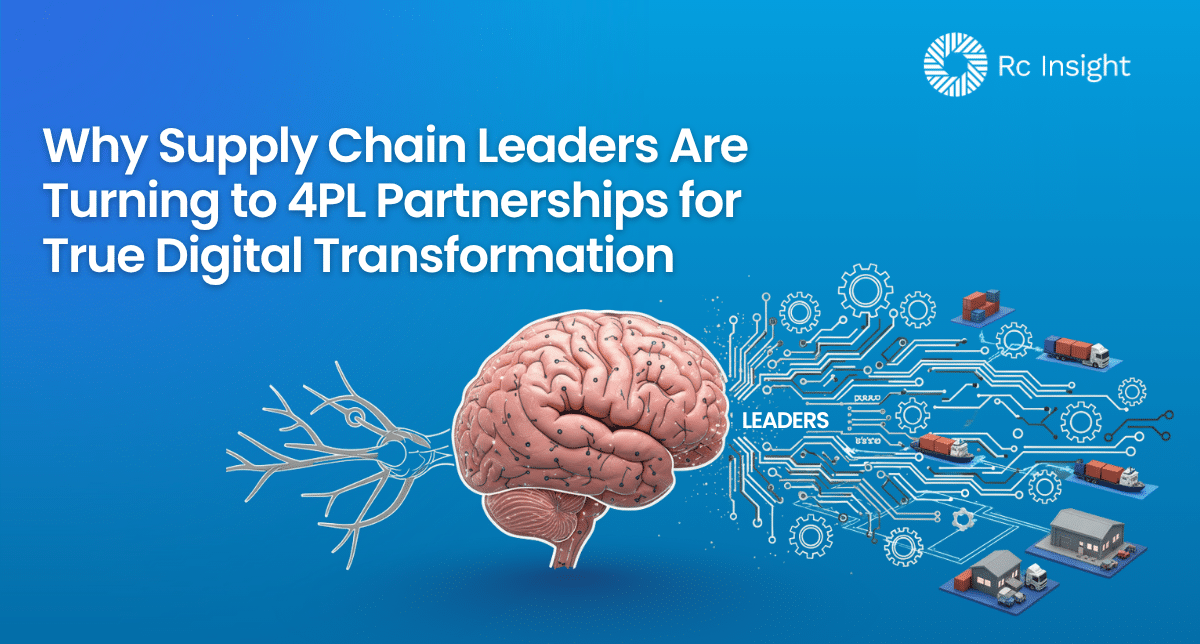
Across global markets, supply chains are facing unprecedented levels of complexity and disruption. Geopolitical tensions, labor shortages, shifting consumer expectations, and unpredictable demand patterns have made traditional logistics models increasingly unsustainable.
Conventional, asset-heavy approaches that once defined supply chain management can no longer deliver the agility and visibility modern enterprises require. That’s why industry leaders are turning to Fourth-Party Logistics (4PL) partnerships, collaborations that merge advanced technology, strategic oversight, and operational excellence to create intelligent, end-to-end ecosystems built for the digital age.
3PL vs. 4PL: The Strategic ShiftTo understand why supply chain leaders are pivoting to 4PL models, it’s important to distinguish them from traditional Third-Party Logistics (3PL) providers.
A 3PL typically manages execution tasks such as transportation, warehousing, or fulfillment, often using its own physical assets. It’s a tactical partnership focused on moving goods efficiently from point A to point B.
A 4PL, however, takes a far more strategic role. It oversees the entire supply chain from procurement to final delivery, without owning assets. The 4PL integrates multiple logistics providers, technologies, and data systems into one unified digital platform.
Key differences include:
Scope: 3PLs execute, while 4PLs design, manage, and optimize entire networks.
Ownership: 3PLs own trucks and warehouses; 4PLs remain asset-neutral, selecting the best partners for each task.
Technology: 4PLs leverage AI, IoT, blockchain, and cloud platforms to provide real-time visibility and predictive analytics.
Partnership Model: 4PLs act as long-term strategic allies, aligning incentives with their clients’ KPIs and outcomes.
In short, 4PLs don’t just move shipments; they orchestrate entire ecosystems.
Technology Integration: The Heart of the 4PL AdvantageAt the center of the 4PL model lies technology integration. Modern 4PLs deploy digital control towers that consolidate data from every node of the supply chain factories, carriers, warehouses, customs, and retailers into a single, cloud-based dashboard.
Artificial intelligence and machine learning analyze billions of data points to forecast demand, optimize inventory placement, and identify the fastest or most cost-efficient routes. IoT sensors embedded in containers and vehicles feed real-time data on location and condition, while blockchain ensures transactional transparency and trust across all stakeholders.
For instance, a global consumer goods brand using a 4PL might see the entire movement of its products from factory production in Vietnam to retail shelves in Paris on a live dashboard. Predictive alerts warn of port congestion, allowing the system to automatically reroute shipments or reallocate stock.
This digital synchronization transforms logistics from reactive management into proactive orchestration.
End-to-End Visibility and Data-Driven DecisionsOne of the most valuable outcomes of 4PL partnerships is total end-to-end visibility. Companies no longer have to rely on fragmented updates from multiple carriers or warehouses. Instead, 4PL control towers provide a panoramic view of the entire network, updated in real time.
When a disruption occurs, such as a factory shutdown or a delayed shipment, the 4PL system instantly detects it, simulates alternatives, and recommends corrective action. Predictive analytics not only help companies manage crises but also anticipate them.
For example, by analyzing historical data and current trends, a 4PL can identify emerging risks such as supplier instability or raw material shortages and advise preemptive actions. This capability turns the supply chain into a living, learning system that continuously improves itself.
Data-driven decision-making also extends to sustainability. Many 4PLs now model carbon emissions across routes and recommend greener alternatives without sacrificing efficiency. This holistic view supports both profit and purpose.
Resilience Through CollaborationDigital transformation isn’t only about technology. It’s also about resilience and relationships. 4PL partnerships are built on shared accountability. Unlike transactional 3PL contracts, 4PL agreements often include performance-based models, where both risk and reward are shared.
For instance, if delivery performance or cost optimization goals are met, the 4PL earns incentives; if not, it shares the impact. This alignment drives continuous improvement, as both parties are invested in operational excellence.
During the COVID-19 pandemic, companies with 4PL partners fared better. Those with real-time visibility and digital control towers were able to pivot operations quickly, rerouting shipments, reallocating stock, and sourcing alternatives while others were still reacting to disruptions.
Resilience, therefore, is no longer a byproduct of logistics; it’s a core deliverable of 4PL transformation.
Global Adoption Across IndustriesThe rise of 4PL is a global movement cutting across industries.
In consumer goods, Unilever partnered with DHL as its 4PL for Europe, achieving cost reductions and improved service levels through centralized control and integrated data platforms. Procter & Gamble relies on a 4PL model to synchronize its vast global network, reducing redundancies and improving forecasting accuracy.
In technology and e-commerce, Apple and Amazon both operate through 4PL-style ecosystems, using IoT, AI, and predictive logistics to manage vast supplier bases and global fulfillment. In manufacturing and automotive sectors, 4PL partners help companies integrate suppliers, logistics providers, and factories into one real-time digital framework.
Even traditional freight giants such as Maersk and Kuehne+Nagel have evolved into full-fledged 4PL providers, offering cloud-based visibility tools and control towers that oversee entire global supply chains.
Across industries, the pattern is clear: those embracing 4PL partnerships are building supply chains that are not only efficient but intelligent, adaptive, and future-ready.
The Future of 4PL: From Orchestration to IntelligenceAs the market continues to expand, the role of 4PLs will evolve from logistics orchestrators to intelligent ecosystems that drive business growth.
Artificial intelligence and generative models will make planning engines more autonomous, capable of designing optimal routing and sourcing strategies in seconds. Digital twins will simulate supply chains under countless scenarios, from political unrest to natural disasters, allowing companies to plan for resilience before disruption strikes.
Sustainability will also become a defining metric. 4PL platforms will embed carbon accounting into every decision, turning environmental responsibility into operational efficiency.
Ultimately, 4PL partnerships represent the convergence of logistics, technology, and strategy. They are transforming supply chains from linear pipelines into dynamic, data-driven networks that think, adapt, and evolve.
ConclusionIn an era defined by volatility and complexity, 4PL partnerships are not just a logistics innovation they’re a business imperative.
By combining strategic management, cutting-edge technology, and collaborative accountability, 4PLs offer what every modern supply chain leader seeks: clarity, control, and agility.
True digital transformation isn’t about digitizing logistics; it’s about redefining how the entire network operates. And in that mission, 4PLs are leading the way.