
Connected Logistics Is Not a Vision. It’s a Very Practical Cost Saver.
Connected Logistics Is Not a Vision. It’s a Very Practical Cost Saver.
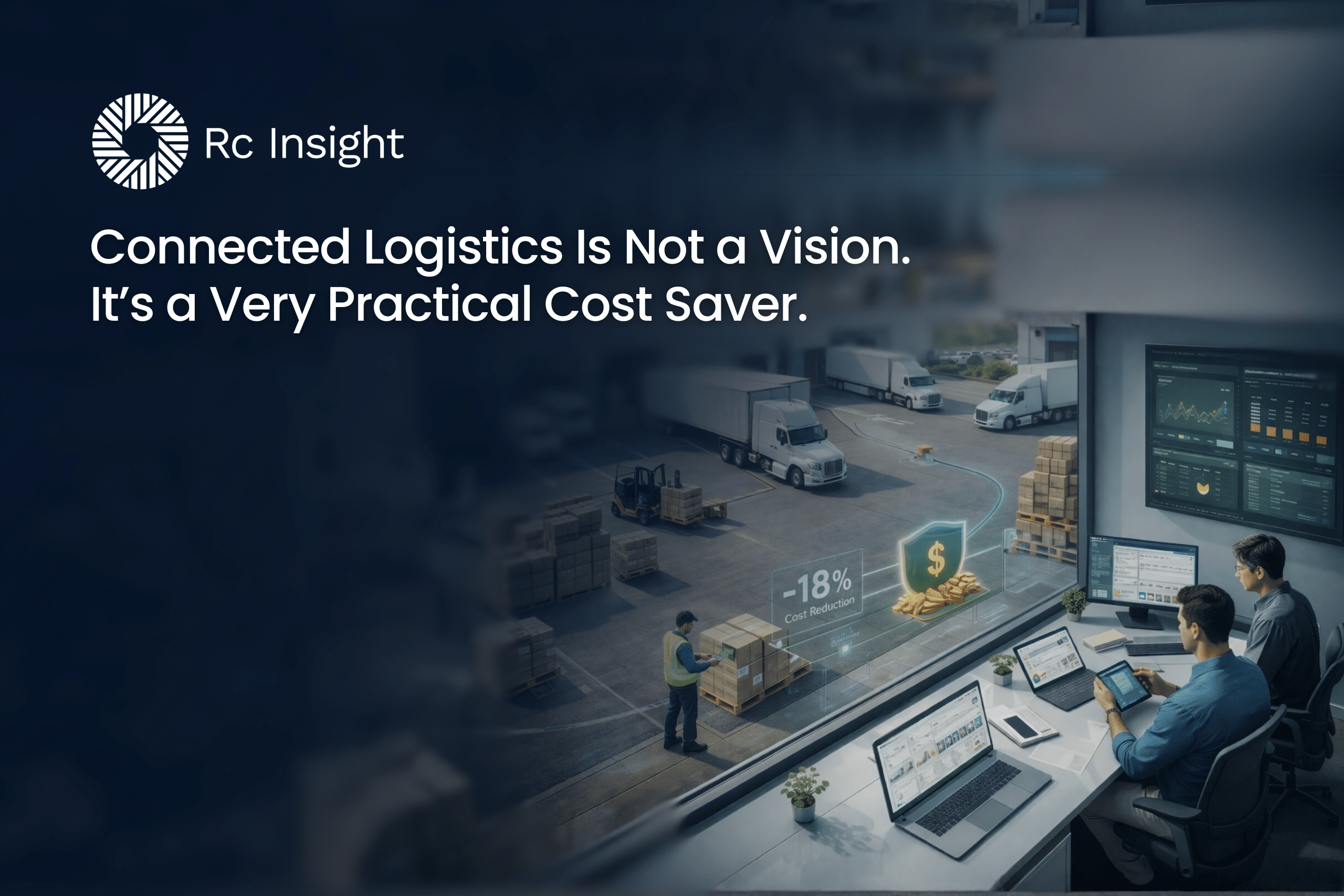
In industries where margins are razor-thin, the instinct is often to cut headcount, suppliers, routes, or inventory.
But the biggest savings today aren’t coming from cutting. They’re coming from syncing.
Connected logistics isn’t a futuristic idea reserved for innovation decks. It’s already saving companies money by making supply chains visible, responsive, and intelligently coordinated end to end.
The Real Cost Problem Isn’t Scale. It’s Fragmentation.Most logistics costs don’t come from one large failure. They come from hundreds of small inefficiencies that go unnoticed every day:
- Trucks running half full
- Inventory sitting idle “just in case”
- Delays discovered too late to correct
- Cold-chain breaches detected after delivery
- Warehouses planning in isolation from demand
Disconnected systems create blind spots. And blind spots are expensive.
Connected logistics addresses this by linking vehicles, warehouses, suppliers, inventory systems, and decision-makers into one continuously updated network.
What “Connected” Actually Means in PracticeConnected logistics is not a single tool or platform. It’s an ecosystem working together:
- IoT sensors and telematics to track vehicles, containers, temperature, and condition in real time
- Cloud platforms that unify data from transport, warehousing, and enterprise systems
- AI and predictive analytics to forecast delays, demand shifts, and maintenance risks
- Digital twins to simulate supply-chain scenarios before decisions are made
The outcome isn’t just visibility. It’s the ability to act before problems turn into costs.
How Connected Logistics Deliver Measurable Impact on the GroundThis is not theoretical. When systems are connected and data flows end to end, the impact becomes visible very quickly in operating costs, inventory levels, and service performance.
Transportation & Fleet OperationsLogistics operators using connected routing, telematics, and real-time traffic data are reducing fuel consumption and empty miles. Dynamic route optimization allows fleets to adjust deliveries as conditions change instead of relying on static plans. Even marginal improvements per route compound at scale, leading to significant cost reductions across large fleets.
Manufacturing & Industrial Supply ChainsManufacturers with complex, global operations are deploying centralized logistics platforms and control towers to synchronize inbound materials, production schedules, and outbound shipments. By aligning transport decisions with live production data, companies are lowering inbound logistics costs, reducing excess inventory, and improving delivery performance simultaneously.
Retail & Consumer GoodsFor retailers, excess inventory and stockouts are two sides of the same costly problem. Connected logistics links demand signals directly with warehouse and transport planning. This reduces unnecessary buffer inventory while ensuring products are available where and when they’re needed. The result is better inventory turns, fewer markdowns, and higher service levels without increasing logistics spend.
Healthcare & Cold-Chain LogisticsIn healthcare, visibility isn’t optional. Connected cold-chain systems continuously monitor temperature, location, and dwell time during transit. When conditions drift outside safe ranges, teams can intervene immediately rerouting shipments or replacing them before quality is compromised. This shift from post-delivery detection to real-time control significantly reduces product loss.
Third-Party Logistics Providers (3PLs)For logistics service providers, connected platforms enable proactive operations. Predictive alerts, real-time shipment visibility, and integrated planning tools reduce manual exception handling and last-minute firefighting. Providers operating this way consistently lower operating costs while improving customer trust and service reliability.
Why the Savings Compound Over TimeThe most powerful benefit of connected logistics isn’t a one-time cost reduction, it’s compounding efficiency.
Over time, connected systems improve:
- Asset utilization
- Inventory turns
- Forecast accuracy
- Operational resilience
Logistics shifts from a reactive cost center to a strategic capability. Decisions improve because they’re based on live, shared data not assumptions or delayed reports.
The Bottom LineConnected logistics isn’t a moonshot. It’s infrastructure.
In an environment of tight margins and constant disruption, companies don’t win by cutting deeper. They win by seeing clearer and acting faster.
Organizations that connect their logistics ecosystems today aren’t just saving costs. They’re building supply chains that are resilient, predictable, and profitable by design, not by chance.