
Inside the Control Tower: What Makes 4PL a Strategic Advantage
Inside the Control Tower: What Makes 4PL a Strategic Advantage
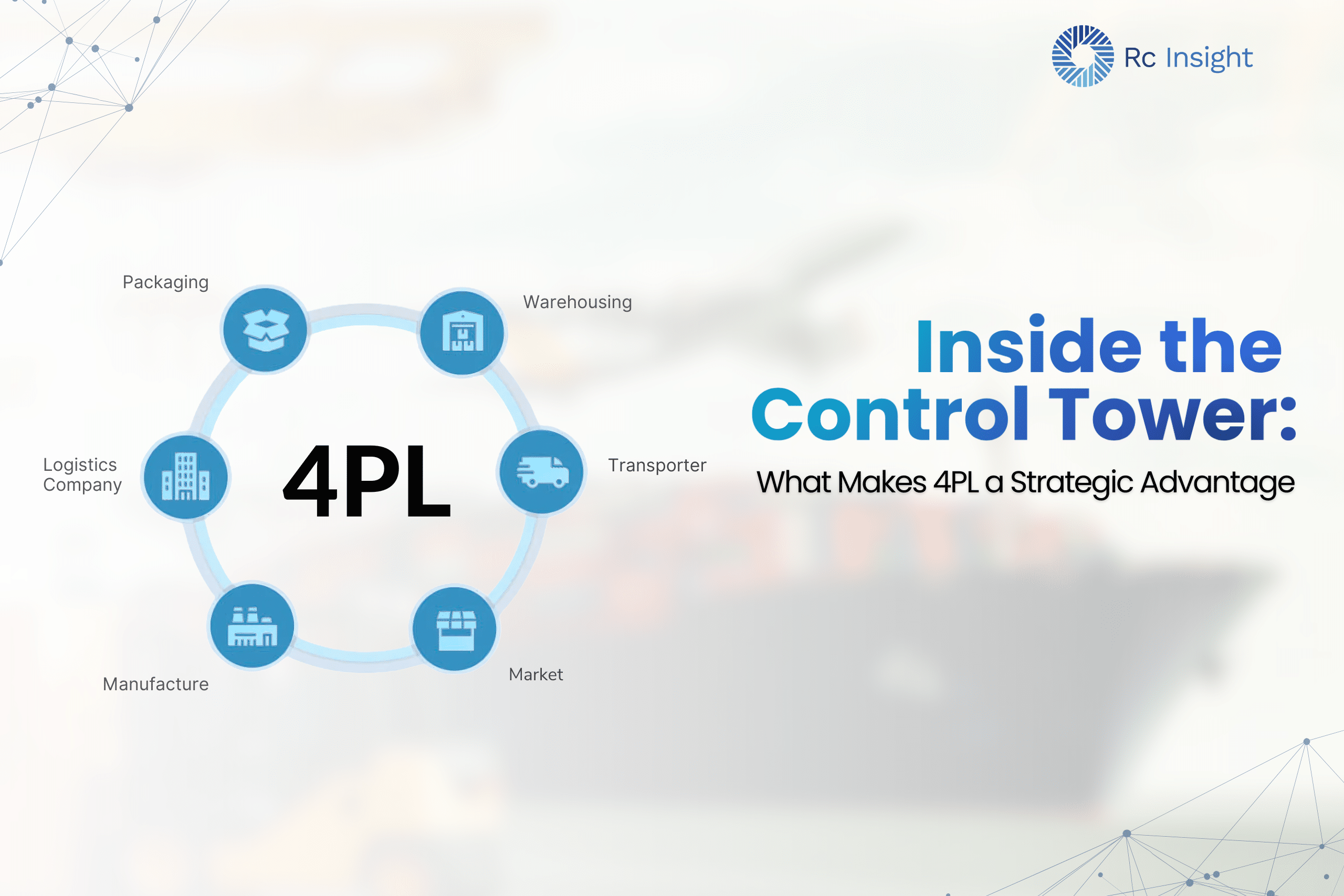
In the intricate dance of global commerce, the ability to anticipate, orchestrate, and adapt has become the new currency of competitiveness. Traditional logistics models, while functional, often fall short of delivering the agility and intelligence modern businesses demand. That’s where Fourth-Party Logistics – 4PL – steps in. Not just as a service provider, but as a strategic command center for the entire supply chain.
At its essence, 4PL operates like the control tower of an airport – overseeing every moving part, making critical decisions in real-time, and ensuring seamless coordination across a fragmented logistics ecosystem.
A Central Brain for a Complex BodyPicture a company managing thousands of SKUs across dozens of markets. Without centralized oversight, the result is often redundant shipments, siloed data, and reactive firefighting. But with a 4PL model in place, decisions are no longer made in isolation. Inventory in one region can be reallocated to another without delay. Transport delays are flagged before they cause stockouts. A single dashboard shows where every item is, where it’s going, and what it’s costing.
This kind of orchestration isn’t hypothetical – it’s powering some of the world’s most efficient supply chains. Large-scale manufacturers have shaved millions off their logistics budgets by centralizing all vendor coordination, performance monitoring, and route planning under a single 4PL umbrella. Retailers are responding to demand shifts not in weeks, but in hours. Even mid-sized e-commerce players are scaling nationally without ever touching a shipping label.
Seeing What Others MissWhat makes 4PL especially potent is its emphasis on visibility. When shipments are delayed, when inventory is misplaced, or when customer expectations shift, most companies find out after the damage is done. With 4PL in place, those blind spots vanish. A sudden spike in demand in one city? Stock is rerouted from lower-demand regions. A geopolitical disruption closes a port? Alternative routing is triggered automatically, avoiding customer impact.
This isn’t just tech for tech’s sake. It’s strategic foresight embedded into daily operations. During global disruptions – like a blocked shipping route or an unplanned factory shutdown – businesses with integrated 4PL systems were the first to reroute, renegotiate, and recover. Their competitors? Still stuck refreshing tracking portals.
From Firefighting to ForecastingA defining trait of 4PL is its use of advanced analytics. Every delay, every shipment, every vendor performance metric is fed into an optimization engine. What once took months of manual reporting is now part of a live feedback loop.
Consider a distributor that moves perishable goods across regions. Without predictive planning, spoilage is inevitable. But with real-time analytics, routes are recalibrated, carrier performance is tracked down to the minute, and deliveries arrive fresher, faster, and with less waste. In logistics, intuition is no longer enough – precision is the new standard.
Streamlining Without Losing ControlPerhaps the most underappreciated benefit of 4PL is simplicity. Instead of managing a constellation of vendors, systems, contracts, and dashboards, companies deal with one partner who manages the rest. One point of contact. One version of the truth. One strategy from start to finish.
And yet, this simplicity doesn’t come at the cost of control. If anything, it amplifies it. Procurement teams can see carrier performance in real-time. Finance can track logistics costs to the SKU. Operations can make decisions with confidence, not guesswork. And executives? They get clarity – what’s working, what’s not, and what’s next.
A Strategic Shift, Not a Tactical One4PL is more than a cost-saving mechanism. It’s a shift in mindset – from logistics as a backend function to logistics as a boardroom lever. Companies that embrace this model don’t just deliver faster or cheaper. They operate with intelligence. They pivot with precision. And most importantly, they serve their customers better.
The businesses that win tomorrow won’t just be the ones with the best products. They’ll be the ones that move smarter, respond faster, and plan with purpose. That’s the promise of 4PL – not as a vendor, but as a visionary.