
Profit Doesn’t Disappear in Logistics. It Leaks Through Process Gaps.
Profit Doesn’t Disappear in Logistics. It Leaks Through Process Gaps.
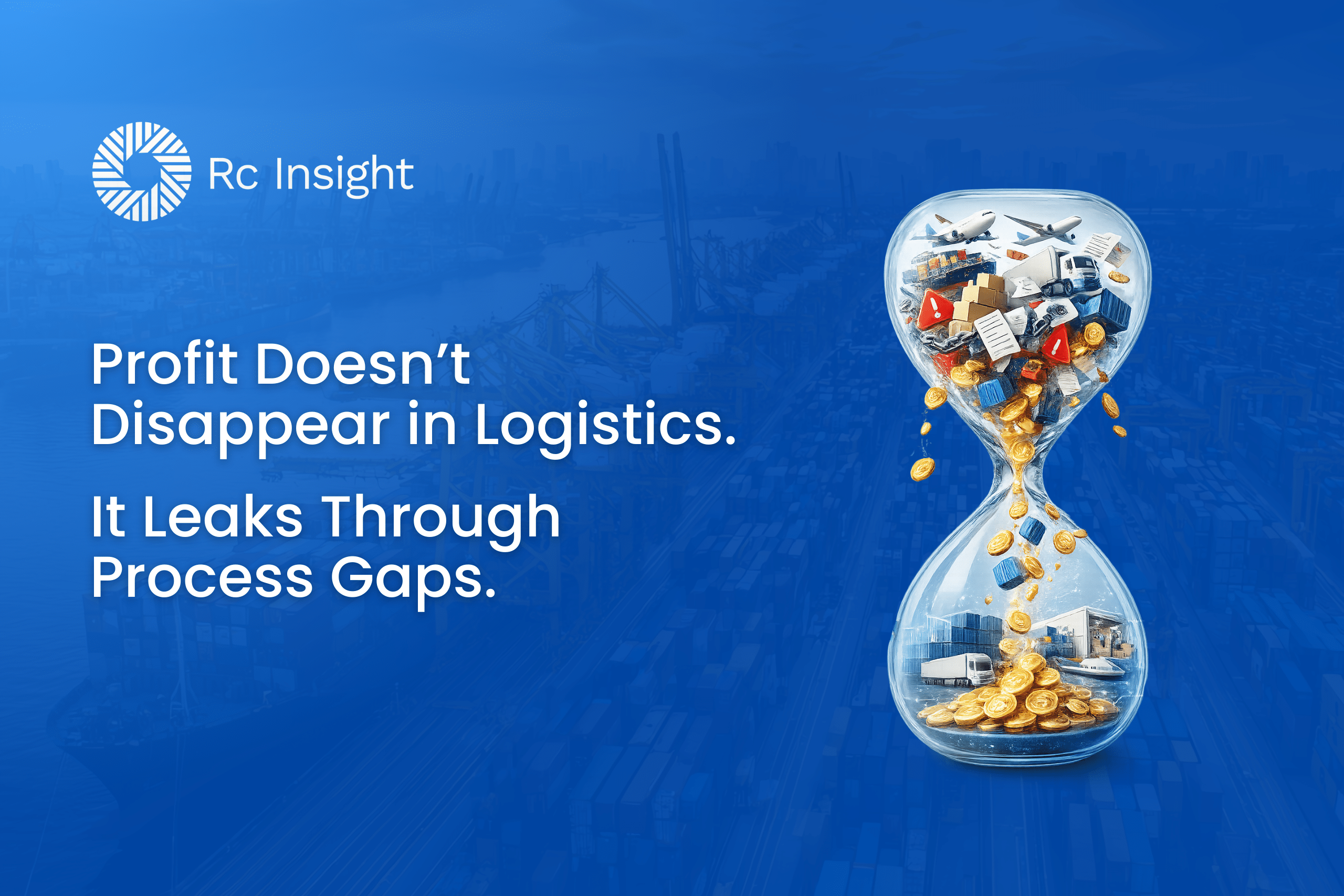
In logistics, profit rarely disappears overnight. It doesn’t collapse because of a dramatic failure or a single operational mistake.
It leaks.
- A shipment delivered but never invoiced.
- A picking error that triggers a return.
- A truck returning empty because routes weren’t optimized.
Each issue looks small on its own. But across thousands of shipments and orders, these gaps quietly drain revenue.
Industry estimates suggest that logistics companies lose 3-15% of potential profit due to operational inefficiencies and disconnected processes. In a sector where margins are already tight, even small leaks matter.
1. Inventory InaccuracyWhen inventory systems don’t match physical stock, companies face stockouts, delayed orders, and excess storage costs.
Even a 2-3% accuracy gap can disrupt fulfillment and lead to lost sales. Many warehouses only discover these discrepancies during periodic audits.
The impact goes beyond operations. It affects customer trust and service levels.
2. Order Picking ErrorsA simple warehouse mis-pick can trigger a chain reaction:
- Return shipping
- Replacement orders
- Additional handling costs
- Customer support workload
The cost of a single picking error is often estimated between $30 and $75.
In high-volume distribution centers, even a 2% error rate can translate into hundreds of thousands of dollars lost annually.
3. Transportation InefficienciesTransportation is often the largest cost center in logistics operations.
One major source of hidden loss is empty miles. In trucking operations, 15-30% of trips run without cargo, meaning fuel, driver wages, and vehicle capacity are wasted.
Organizations that improve route planning and load consolidation often reduce freight costs significantly without increasing shipment volume.
4. Returns and Reverse LogisticsReturns are another major drain on margins, particularly in e-commerce.
Return rates can reach 20-30%, and processing a return can cost up to 65% of the product’s value once transportation, inspection, and repackaging are included.
Without structured reverse logistics processes, companies spend heavily just to recover a fraction of their margin.
5. Compliance and Documentation ErrorsIn international logistics, documentation mistakes can become expensive quickly.
Incorrect customs paperwork, tariff classification errors, or labeling issues can lead to shipment delays, retailer penalties, and regulatory fines.
In one case, a distributor eliminated over $140,000 in annual chargebacks simply by tightening its compliance process.
How Leading Logistics Organizations Fix These GapsCompanies that protect margins focus on visibility, automation, and process discipline.
Examples include:
- Warehouse Management Systems (WMS) – Improve inventory accuracy and guide warehouse workflows.
- Transportation Management Systems (TMS) – Optimize routing, carrier selection, and shipment consolidation.
- Automation and Robotics – Increase warehouse throughput while reducing manual errors.
- Robotic Process Automation (RPA) – Automate repetitive administrative tasks like freight invoice validation and documentation processing.
These improvements don’t just increase efficiency. They protect profitability.
The Metrics That Reveal Profit LeakageOperational gaps usually appear first in performance metrics.
Key indicators include:
- Inventory accuracy rate
- Order picking accuracy
- Return rate
- Freight cost per shipment
- Empty mile percentage
- Invoice exception rate
- On-time in-full delivery (OTIF)
Tracking these metrics consistently helps identify inefficiencies before they become major losses.
The TakeawayLogistics profitability isn’t only about moving goods faster. It’s about ensuring every step of the operation is connected, visible, and accountable.
Many organizations struggle to identify where these inefficiencies exist because the problems are scattered across different systems, teams, and processes.
This is where Rc Insight plays a role. By analyzing logistics operations, identifying hidden inefficiencies, and providing structured operational insights,
Rc Insight helps companies uncover where margins are leaking and how those gaps can be closed.
Because in logistics, profit rarely disappears. It leaks.
And the companies that identify and fix those leaks gain a significant competitive advantage.