
Why Freight Forwarders Are Evolving into 4PL Orchestrators And What It Means for Operational Control
Why Freight Forwarders Are Evolving into 4PL Orchestrators And What It Means for Operational Control
For decades, freight forwarders played a familiar role in global trade. They arranged transportation, managed documentation, negotiated freight rates, and ensured cargo moved from origin to destination. Their value came from operational expertise and strong carrier networks.
But global supply chains have become significantly more complex. Businesses now operate across multiple carriers, transport modes, geographies, warehouses, and technology systems. As a result, companies are no longer looking for logistics partners that simply execute shipments. They are increasingly seeking partners that can coordinate the entire supply chain ecosystem.
This shift is driving many freight forwarders to evolve into Fourth-Party Logistics (4PL) orchestrators.
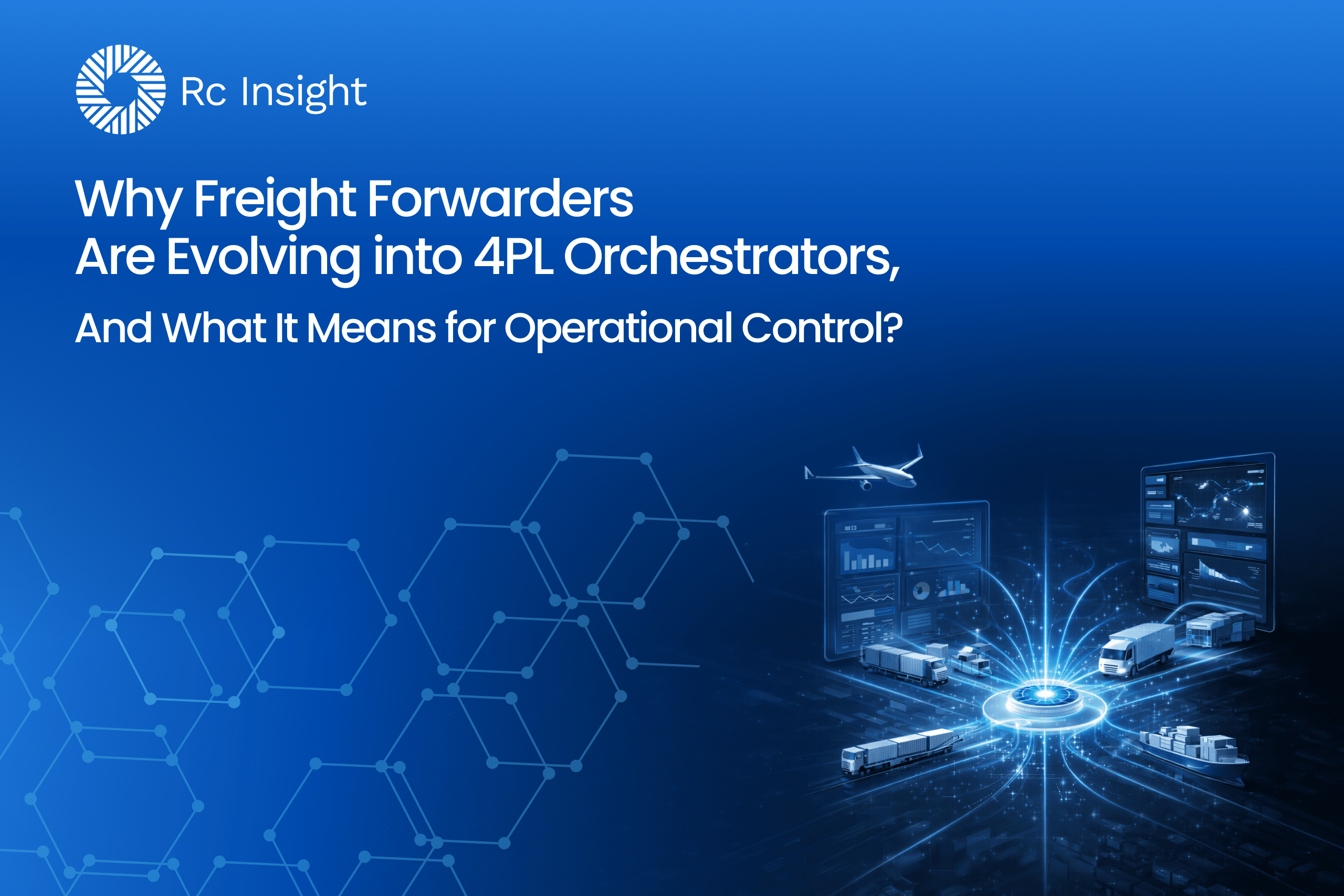
Rather than managing a single piece of the logistics puzzle, 4PL providers oversee the entire network, coordinating transportation providers, warehouses, digital platforms, and analytics tools to deliver end-to-end visibility and control.
The Shift From Execution to OrchestrationTraditional freight forwarders primarily execute logistics tasks such as booking freight, handling customs documentation, and managing individual transport legs.
A 4PL model operates at a different level. Instead of focusing on a single function, it manages the design, coordination, and optimization of the entire logistics network.
In this model, the logistics partner acts as a central orchestrator that integrates multiple service providers, technology platforms, and operational processes. This orchestration layer enables companies to manage complex supply chains through a single control structure.
Several factors are accelerating this transformation:
- Increasing supply chain complexity and geopolitical volatility.
- Demand for real-time visibility and autonomous decision-making.
- Rapid growth of AI-driven logistics platforms that move beyond simple tracking to predictive disruption sensing.
- Regulatory pressure, such as the EU’s Carbon Border Adjustment Mechanism (CBAM), which requires integrated data for carbon accounting across the entire network.
Forwarders that can combine operational expertise with digital coordination capabilities are moving into a far more strategic position within global supply chains.
How Industry Leaders Are Moving Toward the 4PL ModelMajor logistics providers are already shifting toward orchestration-based logistics strategies.
DHL Supply Chain has expanded its Lead Logistics Partner (LLP) model to act as a central coordinator for complex supply chains. For companies like Unilever, DHL manages carrier selection, transport planning, performance monitoring, and digital visibility tools across multiple regions. Instead of simply moving goods, DHL effectively manages the broader logistics ecosystem.
A similar transformation is happening at Maersk. Historically known as an ocean carrier, Maersk has pivoted to become an “integrated provider.” Through the Gemini Cooperation hub-and-spoke network, they have shifted focus toward high-reliability orchestration. Customers no longer just book ocean legs; they use integrated platforms to gain visibility across the entire chain, from origin to inland destination.
Another powerful illustration comes from Amazon. Through its internal logistics network, Amazon coordinates air cargo, trucking, warehousing, and last-mile delivery through centralized data platforms. Rather than relying on fragmented logistics providers, the company orchestrates its entire logistics ecosystem internally, demonstrating the strategic power of centralized supply chain control.
These models highlight how logistics providers are shifting from service execution to operational orchestration.
What This Means for Operational ControlThe rise of 4PL orchestrators is fundamentally changing how supply chains are managed.
Data Becomes the Center of ControlIn a 4PL environment, operational control moves toward centralized digital platforms that integrate shipment data, inventory information, and carrier performance metrics across the entire network.
The organization managing that orchestration platform effectively becomes the control center of the supply chain.
Decision-Making Becomes Network-BasedInstead of optimizing individual shipments or transport legs, 4PL orchestrators focus on optimizing the entire logistics network.
This allows companies to coordinate decisions related to transport mode selection, routing, inventory positioning, and warehouse allocation using a single operational framework.
The result is a supply chain that is more responsive, cost-efficient, and resilient.
Logistics Moves From Cost Center to Strategic CapabilityThe disruptions during the COVID-19 pandemic highlighted how vulnerable fragmented supply chains can be. Companies that lacked visibility struggled to respond quickly to delays, capacity shortages, and port congestion.
By contrast, organizations with strong logistics coordination capabilities were able to reroute shipments, adjust inventory strategies, and respond faster to disruptions.
This shift is changing how companies view logistics. Rather than treating it purely as an operational function, many organizations now see logistics orchestration as a strategic advantage.
The Future of Freight ForwardingFreight forwarding is no longer limited to managing shipments and paperwork. The industry is gradually moving toward network coordination, digital integration, and supply chain orchestration.
Forwarders that successfully transition into 4PL orchestrators will increasingly become strategic partners in supply chain management. Those that remain focused only on transactional services may find it difficult to compete in a world where companies demand integrated logistics control.
In the coming years, the most valuable logistics providers will likely be those that do more than move goods. They will be the ones that coordinate the entire system that moves them.