
Why Technology Should Fit Into Your Day – Not the Other Way Around
Why Technology Should Fit Into Your Day – Not the Other Way Around
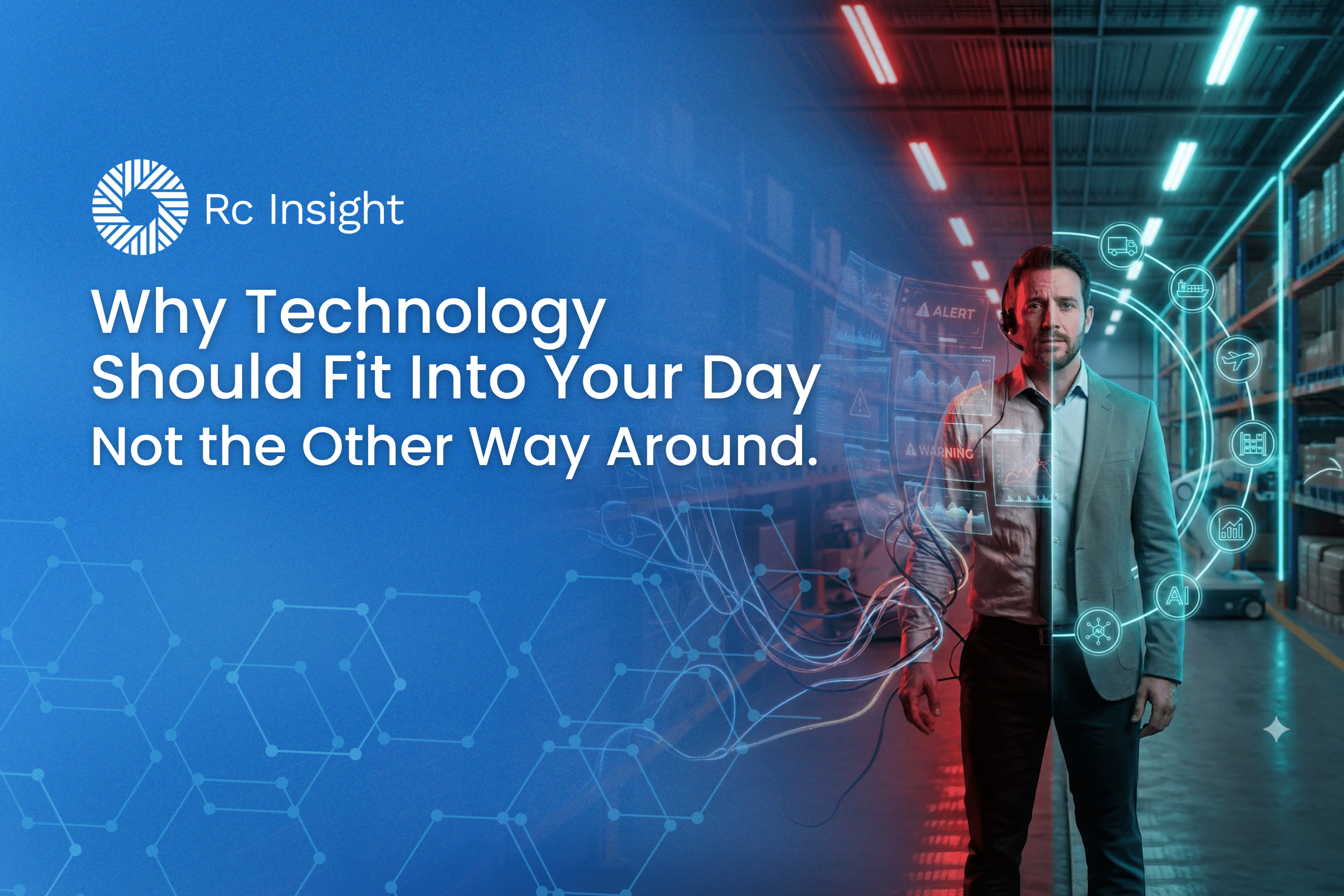
In supply chain logistics, we’ve all seen this.
A new system gets implemented. There’s excitement. Training sessions happen. Dashboards look impressive.
And then operations quietly go back to spreadsheets, phone calls, and WhatsApp groups.
Why?
Because the technology asked the team to change how they work.
The best operational systems don’t do that. They remove friction from existing workflows instead of forcing teams to rebuild their day.
When Systems Dictate the ProcessTraditional enterprise platforms like WMS, TMS, and ERP often come with rigid structures. They assume fixed layouts, fixed approval flows, and fixed data entry methods.
But real-world operations are dynamic. Warehouses change during peak seasons. Dispatchers reroute trucks. Procurement teams raise emergency orders.
When systems don’t adapt, teams create workarounds:
- Shadow spreadsheets
- Manual overrides
- Endless email threads
- Calls to “fix” the system
Instead of improving efficiency, the technology becomes a bottleneck.
Integration gaps make this worse. Delayed inventory syncs, duplicate entries, and outdated order status create risk instead of control.
That’s not transformation. It’s friction.
What Good Technology Looks LikeNow compare this to systems that fit into existing workflows.
For example, a retail distribution team connects order alerts directly into Slack. If replenishment orders miss a cutoff, the team gets notified instantly. No new tool. No extra dashboards. No behaviour change.
Or modern API-driven TMS platforms that:
- Automatically create delivery missions
- Provide real-time tracking
- Trigger customer updates
- Sync billing into finance
The dispatcher keeps working the same way. The system simply removes repetitive work.
That’s the difference.
AI That Supports DecisionsAI should enhance decision points, not add complexity.
When implemented well:
- Route optimization adjusts delivery plans in real time
- Freight tracking predicts delays early
- Warehouse vision systems automate cycle counts
The operator doesn’t change. The system just makes the job easier and faster.
Modular Beats MonolithicToday’s supply chains need flexible, composable technology:
- Visibility layers over legacy ERP
- Analytics through APIs
- Microservices for specific workflows
Instead of replacing everything, companies are adding capabilities where they matter. This reduces risk, speeds adoption, and respects how teams already work.
A Simple TestWhen evaluating new technology, ask one question:
Will this remove friction from my team’s workflow, or force them to change it?
Look for:- Open integrations
- Real-time data
- Role-based flexibility
- Minimal behaviour change
The goal isn’t digital transformation for its own sake. It’s operational clarity.
The Real AdvantageSupply chains don’t win because they have more dashboards.
They win because:- Decisions are faster
- Information flows smoothly
- Exceptions are caught early
- Teams trust the system
The best technology feels invisible. It automates the repetitive, highlights the critical, and supports human judgment.
If your team has to change their entire day to fit the system, it’s the wrong system.
The right one simply removes friction.